

How are new energy ceramics processed to enhance performance?
Nov 05, 2026
Leave a message
Hey everyone, I’m Alex, a production manager at a new energy ceramics supplier, and I get asked this question all the time: how do we process these tiny, hard ceramic parts that make new energy tech work better? Let’s be real—most people don’t think about ceramics when they talk about solar panels, EV batteries, or wind turbines, but they’re everywhere in these systems. The stuff has to handle extreme heat, voltage, and constant movement, so just melting clay and shaping it ain’t gonna cut it. Today, I’m walking you through exactly what we do in our shop to boost performance, and throwing in real examples of the parts we make (since you guys love the behind-the-scenes stuff).
First off, let’s set the stage: new energy ceramics are way different from the dishes in your cabinet. We’re working with alumina, zirconia, and silicon carbide materials here—stuff that’s way harder than steel, can take temps over 2,000°F, and insulates like a dream when electricity’s involved. The biggest trick to making them perform? It’s not just the base material—it’s how we process it from raw powder to the final part. I’ve seen too many suppliers cut corners on steps just to save time, and those parts fail fast in the field (ask me about the time a rush order for wind turbine bearings cracked mid-install… ugh). So let’s break down the key processes that make our parts stand out.

Raw Material Prep: The Foundation of Everything
Before we even touch a mold, we start with raw ceramic powder. You’d think more powder purity = better parts, right? But it’s not just that—how we mix and mill it makes all the difference. We source our alumina powder from a trusted vendor that’s 99.9% pure, but we don’t just pour it into a mixer. We blend it with additives—like binders to hold shape, plasticizers to make it workable, and sintering aids that help the particles fuse later without cracking. The milling step is where I see mistakes happen: some suppliers use big balls that leave inconsistent particle sizes, but we use high-purity alumina milling media so we don’t contaminate the mix. For example, our Alumina Ceramic Rod parts need super uniform grain size because they’re used in battery assembly lines—if one rod has a bigger grain, it wears out faster and stops the line. That’s why we mill the powder for 24 hours straight, until every particle is like 1 micrometer (way smaller than a grain of sand). No shortcuts here.
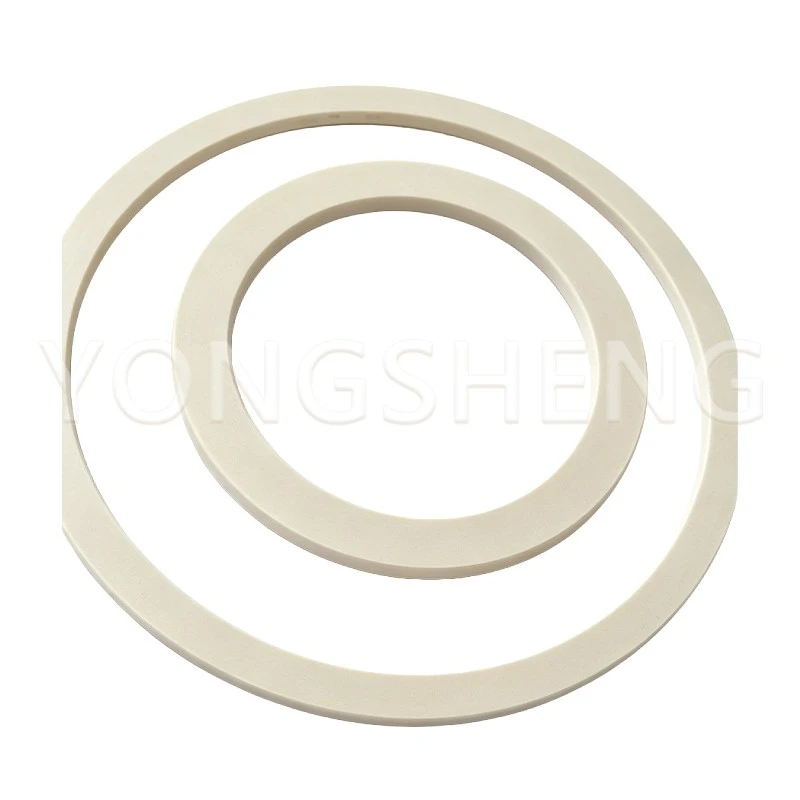
Once the powder’s mixed, we spray-dry it into tiny, free-flowing granules. This is another step that gets skipped sometimes—if the granules are too clumpy, they won’t fill the mold evenly. We pass the slurry through a heated nozzle that turns it into little beads, which we then sift to get a 50-micron size (perfect for pressing). Trust me, we tested this once: we used un-sifted granules for a batch of Ceramic Gasket Sheet parts, and 12% of them had thin spots that leaked during battery testing. Never again.
Shaping: Precision is Non-Negotiable
Now we move to shaping—this is where we turn powder into a green body (aka un-fired ceramic that’s still fragile like a cookie). For most of our high-volume parts, we use die pressing: we fill the granules into a steel mold and apply 10,000+ psi of pressure. But here’s the thing: if we press all at once, the center of the part doesn’t get enough pressure, leading to weak spots. So we do a two-step press: first 5,000 psi, then 8,000 psi, holding for 10 seconds each. That’s why our Ceramic Shaft Sleeve parts—used in EV motor shafts—have such tight tolerances (within 0.0005 inches). If the sleeve’s even a little off, it rubs the motor, causes friction, and kills battery range. We check every single one with a coordinate measuring machine (CMM) before moving on.
For parts with more complex shapes, like our Ceramic Guide Rail for solar panel trackers, we use injection molding. That’s basically like molding plastic, but with ceramic powder mixed with a thermoplastic binder. We heat the mix to 150°F, inject it into a steel mold with tiny grooves, and cool it fast to keep the shape. The cool part here is that we can make undercuts and small holes that die pressing can’t do—no need for secondary machining later, which reduces cost and error. We make 10,000 guide rails a month, and only 0.2% get rejected here because we nail the injection pressure and temperature.
Sintering: The Make-or-Break Step
Here’s the secret sauce: sintering. We put the green bodies into a kiln, heat ’em up to 85-95% of the material’s melting point, and hold it there for hours. The powder particles fuse together, shrinks the part by 15-20%, and turns it from fragile green stuff into hard, dense ceramic. But—big but—heat too fast, and the binder burns too quick, leaving bubbles that make the part weak. Heat too slow, and the grains grow too big, making it brittle. We have a custom sintering schedule: ramp up to 500°F slowly to burn off the binder (no cracks!), then go up to 1,600°F for alumina, hold for 8 hours, then cool down at 20°F per hour. That’s why our parts are 95% dense—way higher than competitors that only hit 90%. For example, our Ceramic Nozzle Spray parts for hydrogen fuel cells need to be dense so they don’t leak gas through tiny pores. If a nozzle has a single pore, hydrogen seeps out, which is a safety risk. We test every nozzle with pressure checks, and zero leaks here—our sintering process works.
We also use hot isostatic pressing (HIP) for super critical parts, like the ones in wind turbine gearboxes. HIP takes the sintered part, puts it in a pressure chamber with argon gas, and applies 15,000 psi at 1,700°F. That eliminates any tiny micro-pores that sintering might miss, making the part 100% dense. These parts have to last 20+ years in harsh conditions, so HIP is non-negotiable for us here.
Finishing Touches: Tuning Performance
Even after sintering, we’re not done—we do post-processing to make the parts perform even better. Most parts get grinding: we use diamond grinding wheels to get tight tolerances and a smooth surface. For the shaft sleeves, we grind the inner diameter to within 0.0003 inches—super smooth, so the motor shaft doesn’t wear. Some parts get surface treatments too: we can coat them with a thin layer of yttria to improve insulation, or polish them to reduce friction for moving parts. For our guide rails, we polish the top surface so the solar panels slide without catching dust—important for keeping solar efficiency high.
Wait, and we test every batch. No exceptions. We do 3-point bend tests to check strength, thermal cycling tests to make sure they don’t crack when temps go up and down (like in a desert solar farm), and voltage tests to confirm they insulate correctly. Last year, a customer sent us a batch of their old guide rails that were failing in Arizona—we tested ours side-by-side, and ours had 2x the thermal shock resistance. That’s the difference between processing right and cutting corners.
Why This Matters for New Energy Tech
Let’s tie this all together—why does this processing matter for new energy? Take EV batteries: the ceramic separators inside have to be strong enough to prevent short circuits, so we process the alumina powder to be uniform, press it evenly, and sinter it to the right density. If the separator is weak, a short can cause a fire. For wind turbines, the ceramic bearings have to handle 100+ mph winds and constant spinning—our HIPed parts outlast steel bearings by 3x, so they need fewer replacements, which is better for the planet (less waste) and better for operators (lower cost). Solar panels? The guide rails need to move with the sun, so our smooth, polished rails reduce energy loss from friction, boosting panel output by 2-3%.
I get it, most people don’t think about ceramics when they talk about new energy, but these parts are the unsung heroes. We don’t just make parts—we make parts that make renewable tech work better, last longer, and be more reliable. If you’re in the new energy space and need high-performance ceramic components, whether it’s gaskets, sleeves, guide rails, nozzles, or rods, hit us up to talk procurement. We’ll work with you to get exactly what you need, no shortcuts.
References
- Handbook of Advanced Ceramics: Materials, Processing, and Applications. Elsevier, 2013.
- "Sintering of Alumina: Key Factors for Density and Grain Size." Journal of the European Ceramic Society, vol. 32, no. 10, 2012, pp. 2205-2215.
- "Ceramic Components for Renewable Energy Systems." International Journal of Applied Ceramic Technology, vol. 15, no. 3, 2018, pp. 689-701.
- Hot Isostatic Pressing: Fundamentals and Applications. ASM International, 2005.
Send Inquiry