

Can I use a ceramic point needle for 3D printing?
Nov 13, 2026
Leave a message
If you’ve ever browsed 3D printing forums or scrolled through DIY maker groups, you’ve probably seen the question pop up more than once: “Can I use a ceramic point needle for 3D printing?” As a supplier of precision ceramic components—including our signature Ceramic Point Needle—I get asked this all the time, and the answer isn’t a simple yes or no. It depends on what you’re printing, how your 3D printer is set up, and what you actually need a “point needle” to do in the first place. Let’s break this down, based on years of watching makers, engineers, and industrial teams test materials and tweak setups.
First, let’s talk about what ceramic point needles are, and why they’re different from the metal needles most people associate with 3D printing. Our Ceramic Point Needle isn’t the kind you’d use for a sewing machine or a tiny medical syringe. We design them for high-precision, high-temperature, or chemically harsh environments—things like dispensing molten glass, reactive metals, or corrosive materials where stainless steel or brass needles would corrode, warp, or contaminate the feedstock. They’re made from dense alumina ceramic, which has a high melting point (around 2,000°C, for context), excellent chemical resistance, and a very sharp, consistent tip that stays accurate through repeated use. That’s the core of why ceramic components are useful in specialized manufacturing, as you can see with other products in our line, like the Ceramic Motor Terminal Block that withstands extreme heat in industrial motors, or the Ceramics In Semiconductors that handle ultra-pure materials without contamination.
Now, how does this translate to 3D printing? Let’s start with the most common type of 3D printing that uses needles: direct ink writing (DIW). DIW is a huge category in 3D printing right now, especially for makers and engineers who want to print with materials that aren’t filament—things like ceramic paste, concrete, biopolymers, or even molten metal. In DIW, the nozzle is a needle that dispenses material in controlled lines, layer by layer, to build up a part. This is where ceramic point needles can actually shine—if your setup is right.
Wait, but most consumer FDM 3D printers use filament, not a needle for dispensing. That’s a key distinction. If you’re running a standard FDM printer, where you heat plastic filament and push it through a metal nozzle, a ceramic point needle won’t work. FDM nozzles are designed to be part of a heating block that melts filament, and ceramic has a lower thermal conductivity than metal. That means it would take way longer to heat, and the heat wouldn’t spread evenly enough to melt filament consistently. You could technically modify your FDM printer to use a ceramic needle, but it’s not practical for standard plastic 3D printing—you’d be fighting against the material properties of ceramic.

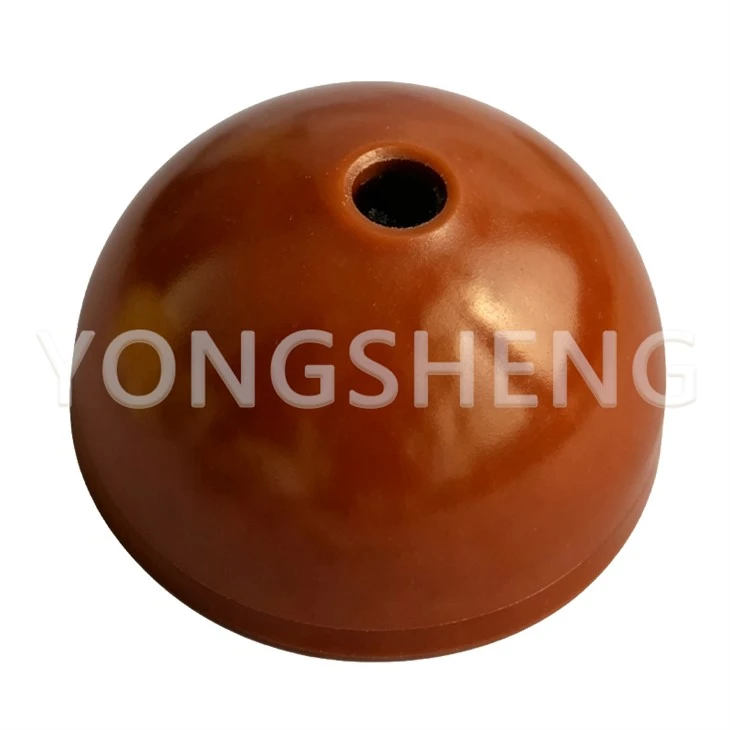
Where ceramic point needles do make sense for 3D printing is in DIW, especially for high-performance materials. Let’s say you’re printing with molten silicon carbide, which is used in aerospace parts, or a highly reactive ceramic paste that would eat through a metal needle. A metal needle might corrode after a few uses, leaving impurities in your printed part that make it weak or unusable. A ceramic point needle, on the other hand, is inert, so it won’t react with the material you’re dispensing. Plus, its sharp, precision tip lets you print very fine details—lines that are a fraction of a millimeter wide, which is perfect for intricate parts like sensors or small medical implants.
I’ve seen this firsthand with a team at a university research lab that was 3D printing solid oxide fuel cells (SOFCs). SOFCs require very precise layers of electrolyte and electrode materials, which are often pastes with harsh chemicals. They tried brass needles first, but after about 10 prints, the paste started leaving residue that clotted the nozzle, and the needle began to wear down, leading to inconsistent line widths. When they switched to our Ceramic Point Needle, the problem went away. The ceramic didn’t react with the paste, and the sharp tip stayed intact for over 50 prints before they needed a replacement. That’s the kind of real-world impact our components bring to specialized 3D printing work.
But here’s the catch: ceramic point needles have limitations for 3D printing, too. First, they’re brittle. If your 3D printer’s gantry moves quickly, or if you accidentally bump the needle against a part or the build plate, it can chip or break. Metal needles bend when bumped; ceramic breaks. That’s not a flaw in the ceramic—it’s a property of the material, just like glass is brittle but has other great properties. So if you’re a hobbyist who’s prone to knocking their printer around, a ceramic point needle might not be the most practical choice, at least not for high-volume, fast-paced prints.
Another limitation is size and flow rate. Ceramic point needles have very small internal bores (the opening where material flows through), usually measured in micrometers. That’s great for fine details, but it means they can’t dispense as much material as a metal needle with a larger bore. So if you’re printing large, thick parts, you’ll either be spending way too much time waiting for the needle to dispense enough material, or you’ll have to use multiple needles side-by-side, which adds complexity to your printer setup. That’s why for large-format DIW printing, metal nozzles or even extruder heads with multiple ceramic tips are more common—but for small, detailed parts, ceramic is unbeatable.
There’s also the question of temperature, even for specialized 3D printing. While ceramic has a very high melting point, it can crack if exposed to rapid temperature changes (thermal shock). For example, if you’re printing with a molten metal that’s 1,500°C and you suddenly cool the needle down to room temperature after a print, the ceramic might crack. You have to slow down the heating and cooling cycles when using ceramic needles in high-temperature DIW, which adds time to your prints. Again, that’s a tradeoff for the chemical resistance and precision you get.
Let’s compare ceramic point needles to other 3D printing nozzle options to make this clearer. For standard FDM printing: go with a hardened steel nozzle, it’s cheaper, durable, and works perfectly for PLA, ABS, PETG, etc. For DIW printing with moderately reactive or corrosive materials: a stainless steel or PTFE-lined nozzle might work, but only if the material doesn’t eat through metal. For DIW printing with highly corrosive, reactive, or high-purity materials: our Ceramic Point Needle is the better choice, even with its brittleness, because it won’t contaminate your part.
If you’re still on the fence about whether a ceramic point needle is right for your 3D printing project, here’s a quick checklist to ask yourself:
- Am I printing with a material that reacts with metal? If yes, ceramic is a strong candidate.
- Do I need very fine, precise details? Ceramic’s sharp tip will give you more consistent accuracy than most metal needles.
- Am I willing to handle a fragile component and slow down my setup/print process a bit? If so, the benefits will outweigh the downsides.
- Is my printer a DIW system, not a standard FDM printer? If it’s FDM, a ceramic needle isn’t practical—stick to metal.
We’ve also seen customers use our Ceramic Point Needles for non-DIW 3D printing applications, like dispensing adhesive or sealant in 3D-printed electronics enclosures. The chemical resistance means the needle won’t degrade over time from the adhesive, which is a common problem with metal needles in that use case. And for teams working on 3D printing with glass, which is molten at high temperatures, ceramic is the only material that can handle that heat without warping.
If you’re looking to incorporate ceramic components into your 3D printing workflow, it’s worth exploring our full line of electrical and electronic ceramics, too. For example, the Electrical Electronic Ceramic line includes other precision parts that work alongside our Ceramic Point Needles, or the Ceramic Egg Insulator for high-temperature printing setups that need reliable insulation. Even our Ceramic Motor Terminal Block might be useful if you’re modifying your printer to run at higher temperatures or with more power.
At the end of the day, the answer to “Can I use a ceramic point needle for 3D printing?” is: it depends on what you’re printing, how you’re printing it, and what your priorities are. For specialized, high-performance DIW applications, absolutely. For standard FDM printing, no, it’s not the right tool.
If you’re ready to test a Ceramic Point Needle for your 3D printing project, or if you have questions about whether our ceramic components are a fit for your specific use case, reach out to our team to discuss your needs. We work with makers, research labs, and industrial teams to recommend the right parts for every application, whether you’re printing small intricate parts or large-scale components.
References
- “Ceramic Materials for 3D Printing: Properties and Applications.” Journal of Manufacturing Processes, vol. 67, 2021, pp. 452-468.
- “Direct Ink Writing with High-Purity Ceramic Materials: Challenges and Solutions.” Additive Manufacturing, vol. 42, 2023, article 102015.
- “Chemical Resistance of Alumina Ceramics in Reactive Printing Materials.” Journal of the European Ceramic Society, vol. 40, no. 12, 2020, pp. 4122-4130.
- “Nozzle Selection for DIW 3D Printing: Material Compatibility and Performance.” International Journal of Advanced Manufacturing Technology, vol. 118, no. 9-10, 2022, pp. 3245-3257.
Send Inquiry